
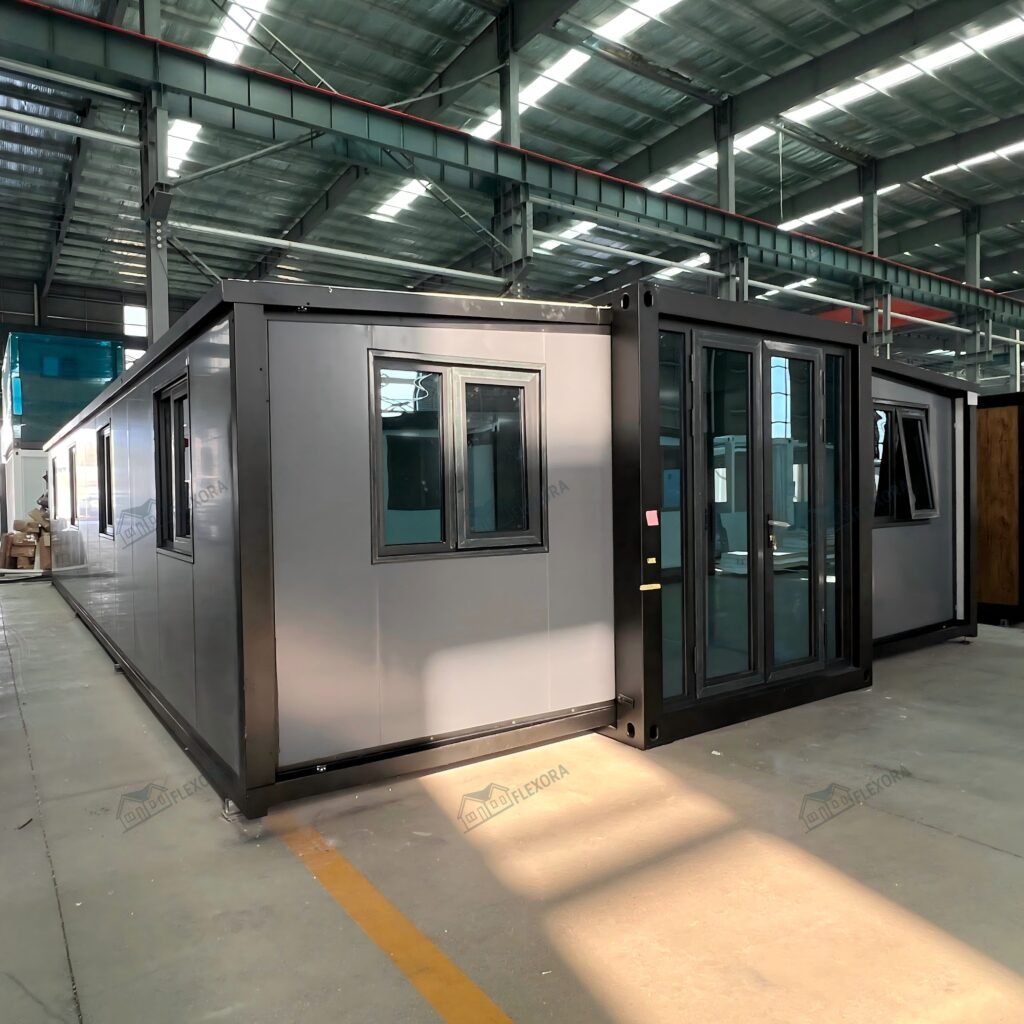
Certified Expandable Container House For global B2B buyers of modular housing solutions, architectural aesthetics are completely secondary to structural safety. When developing commercial resorts in coastal zones vulnerable to hurricanes, mountainous regions with heavy snow loads, or active seismic areas, chasis durability is everything.
Selecting a certified expandable container house is the single most effective guarantee to protect both your commercial capital investment and human lives. Below, we break down the core engineering pillars that allow these high-end units to withstand the most hostile climates on earth.
1. Galvanized Steel: The Ultimate Barrier Against Marine Corrosion
The absolute greatest enemy of metal-framed structures in beachfront resorts or island developments is high atmospheric salinity. Low-grade steel units often suffer from severe premature rusting within five years.
- Industrial Protection: The main structural chassis of our premium units is manufactured exclusively from hot-dip galvanized structural steel.
- Multi-Layer Sealing: This metal is treated with a specialized multi-layer epoxy coating that seals the steel entirely, preventing saltwater moisture from triggering electrochemical degradation.
2. Aerodynamic Ratings and Extreme Load Resistance
A true folding container home must function like a secure bunker once fully deployed on site. The signature butterfly wing design is engineered not just for shipping logistics, but to deflect immense wind forces:
- Wind Load Ratings: The aerodynamic frame and reinforced anchoring systems allow the building to comfortably withstand heavy gales up to Grade 11 without experiencing any structural warping.
- Snow Load Capacity: The reinforced sandwich panel roof, integrated with hidden steel purlins, is calculated to support heavy snow accumulation up to $100\,\text{kg/m}^2$, making it perfect for alpine ski lodges or northern resort developments.
3. Advanced Thermal Insulation: Comfort from $-20^\circ\text{C}$ to $45^\circ\text{C}$
Energy efficiency is the beating heart of modern residential modular engineering. It is not enough for a structure to be physically strong; it must be thermally insulated to slash heating and cooling bills over time.
By utilizing high-density Polyurethane (PU) sandwich panels or fire-retardant EPS with built-in thermal breaks, the interior of the home maintains a highly stable temperature. This ensures comfortable living conditions whether exposed to scorching desert sun or freezing winter blizzards.
Conclusion
Investing in a certified expandable container house translates directly into long-term commercial peace of mind. By eliminating structural rust maintenance and ensuring maximum physical defense against natural elements, these premium units deliver an operational lifespan exceeding 20 years.
At Flexora House, precision engineering and structural safety dictate every single weld on our factory floor. If you are planning an upcoming development in a challenging climate environment, contact our engineering experts today to receive full compliance certifications and custom floor plans.