
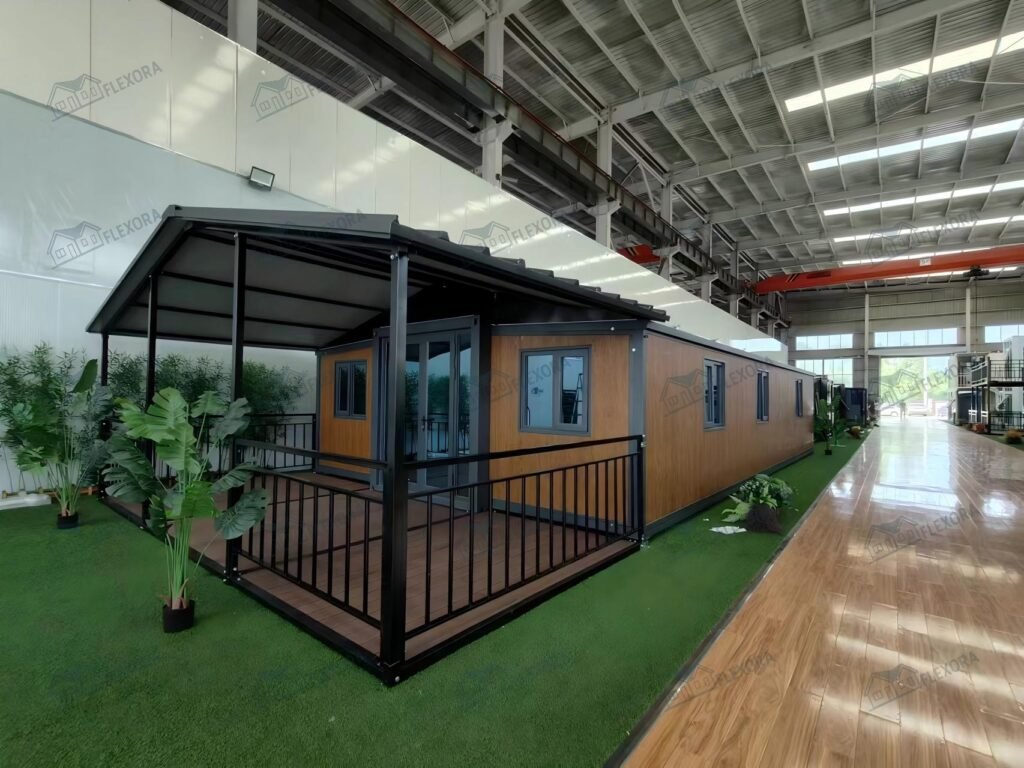
1. Operational Benefits for Rural Farms and Vineyards
Constructing farm manager quarters, field offices, or agritourism cabins in remote agricultural land often faces labor shortages and high transit costs:
- Farmland Soil Conservation: Supported by simple concrete piers or ground screws, the structures eliminate deep-ground concrete excavation, leaving surrounding topsoil undisturbed.
- Corrosion & Moisture Resistance: Finished with industrial-grade epoxy coatings, the steel chassis withstands prolonged exposure to irrigation humidity, dust storms, and agricultural chemical drift.
- Year-Round Thermal Control: Insulated with 75 mm high-density polyurethane (PU) or rockwool sandwich panels, ensuring stable indoor temperatures during winter frosts and intense summer heat.
2. Practical Farm Layout Configurations
- Agronomy Offices & Field Testing Labs: Pre-wired spaces tailored for harvest management, supervisory operations, and delicate testing instrument storage.
- Estate Residences & Agritourism Lodging: 2-bedroom or 3-bedroom floor plans with factory-integrated bathrooms and kitchenettes, ideal for on-site staff housing or vineyard guest accommodations.
3. Agribusiness Logistics & Engineering FAQ
- Can modular estate housing operate on off-grid utility systems?Yes. All internal wiring and plumbing arrive pre-installed to international codes, enabling rapid plug-and-play integration with solar photovoltaic systems, battery banks, septic tanks, and well-water filtration units.
- How are maritime shipping expenses minimized for volume orders?The butterfly-wing mechanical folding design allows two fully finished 20ft housing modules to pack side-by-side inside a single 40ft High Cube (40HQ) ocean container, optimizing CIF containerized freight efficiency.
Conclusion
Deploying modular agricultural estate housing allows agribusiness operators and rural developers to establish on-site living and administrative facilities in days without interrupting crop production cycles.